 admin@technicalrvijay.com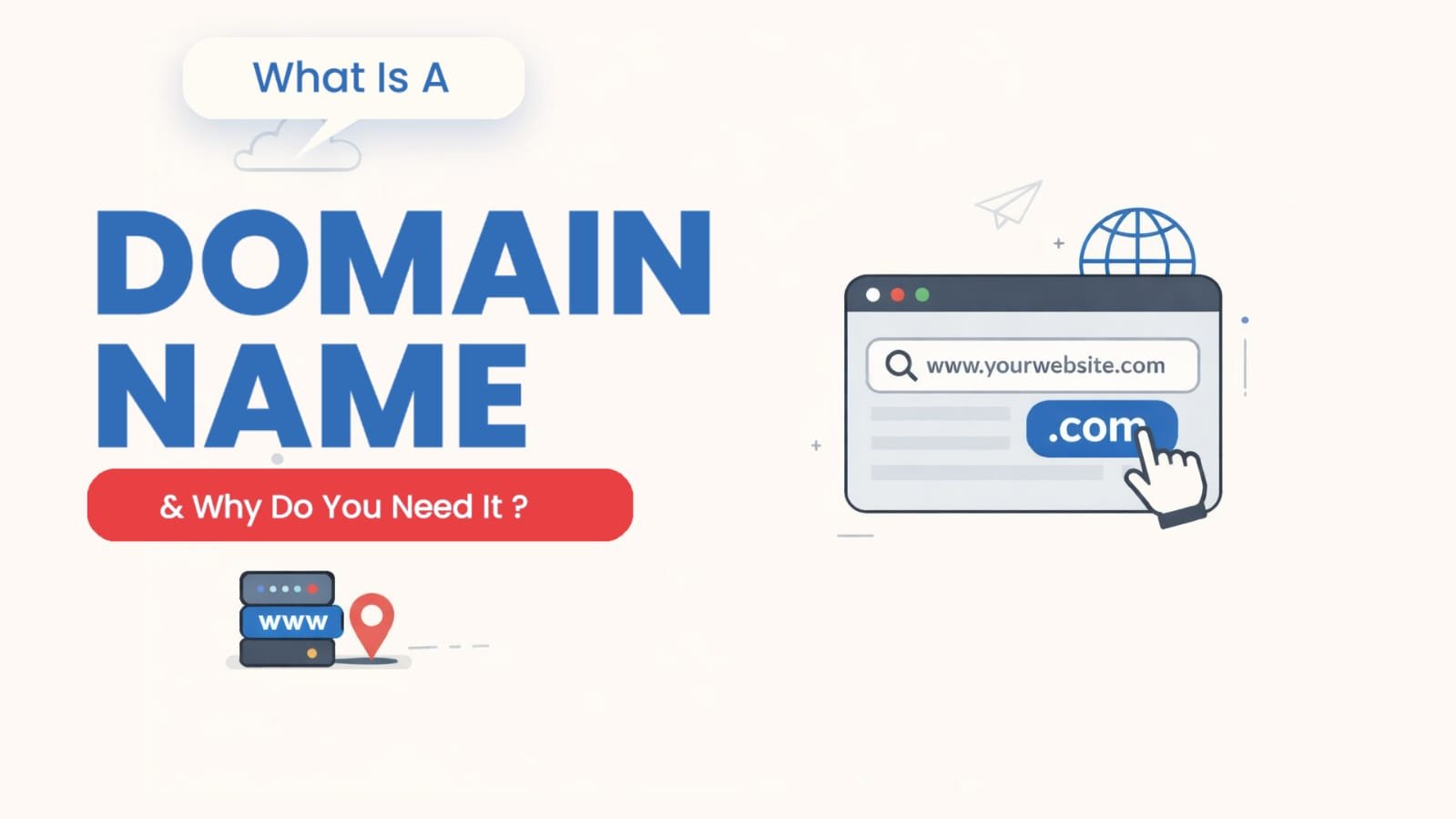
If you are planning to create a website or blog, one of the first things you will hear about is a “domain name.” But what exactly is a domain name, and why is it so important?
In simple terms, a domain name is your website’s address on the internet. It is what people type into their browser to visit your site.
In this guide, you will clearly understand what a domain name is and why you need it, especially if you are serious about building an online presence.
What Is a Domain Name?
A domain name is a human-readable web address that directs users to a specific website.
For example:
example.com
Behind the scenes, websites are identified by IP addresses (a series of numbers). But remembering numbers like:
192.168.1.1
is difficult. That’s why domain names were created.
The Domain Name System (DNS) converts domain names into IP addresses so browsers can load the correct website.
You can learn more about the Domain Name System here:
https://www.icann.org/resources/pages/what-2012-02-25-en
How Does a Domain Name Work?
When you type a domain name into your browser:
- Your browser sends a request to a DNS server.
- The DNS server finds the matching IP address.
- Your browser connects to the website’s server.
- The website loads on your screen.
This entire process happens within seconds.
Parts of a Domain Name
A typical domain name has two main parts:
1. Domain Name (Second-Level Domain)
This is the main name you choose.
Example:
example
2. Domain Extension (Top-Level Domain – TLD)
This is the part after the dot.
Common extensions include:
- .com
- .net
- .org
- .info
“.com” is the most widely used and recognized extension.
Official information about domain structure can be found here:
https://en.wikipedia.org/wiki/Domain_name
Why Do You Need a Domain Name?
If you are serious about building an online identity, you need a domain name.
Here’s why:
1. Professional Appearance
A custom domain looks professional.
Compare:
yourname.blogspot.com
vs
yourname.com
A custom domain builds trust and credibility.
2. Brand Identity
Your domain name becomes your brand.
It:
- Represents your business
- Reflects your niche
- Builds recognition
Over time, your domain becomes associated with your content and expertise.
3. Full Ownership and Control
If you use free platforms, you may not fully control your website.
With your own domain:
- You control content
- You manage hosting
- You decide design and structure
Ownership provides long-term security.
4. Better Monetization Opportunities
If you plan to:
- Use Google AdSense
- Do affiliate marketing
- Sell products
- Offer services
A custom domain increases approval chances and trust.
Professional websites are more likely to meet monetization standards.
5. SEO Benefits
While domain names alone do not guarantee high rankings, they help with:
- Branding
- Click-through rates
- User trust
Search engines prioritize helpful content, but professional presentation improves overall credibility.
Google explains how search works here:
https://developers.google.com/search/docs/fundamentals/how-search-works
6. Long-Term Growth
If you plan to grow your website over years, investing in a domain is important.
Changing domains later can:
- Affect traffic
- Reduce brand recognition
- Cause SEO challenges
Starting with a proper domain saves future effort.
Domain Name vs Web Hosting
Many beginners confuse domain and hosting.
Domain Name:
Your website address.
Web Hosting:
The server where your website files are stored.
You need both to run a website.
Think of it like this:
- Domain = Your home address
- Hosting = The actual house
Both work together.
How to Choose a Good Domain Name
When selecting a domain:
- Keep it short
- Make it easy to spell
- Avoid numbers and hyphens
- Choose .com if possible
- Make it relevant to your niche
Simple and memorable names perform better long term.
How Much Does a Domain Cost?
Domain prices vary, but most standard domains are affordable.
Cost depends on:
- Extension (.com, .net, etc.)
- Demand
- Registrar
Renewal fees apply yearly.
Do You Always Need a Domain Name?
If you are:
- Practicing blogging
- Testing ideas
- Creating a hobby project
You can start with free platforms.
But if you are:
- Building a business
- Planning monetization
- Creating a personal brand
A custom domain is strongly recommended.
Common Mistakes to Avoid
Avoid:
- Choosing very long names
- Using complicated spelling
- Copying famous brand names
- Ignoring renewal dates
Simple, unique, and relevant is always better.
Final Thoughts
Understanding what a domain name is and why you need it is the first step toward building a strong online presence.
A domain name:
- Gives your website identity
- Builds trust
- Supports branding
- Helps long-term growth
While you can start without one, serious blogging and professional websites require a custom domain.
Choosing the right domain today lays the foundation for your digital future.