 admin@technicalrvijay.com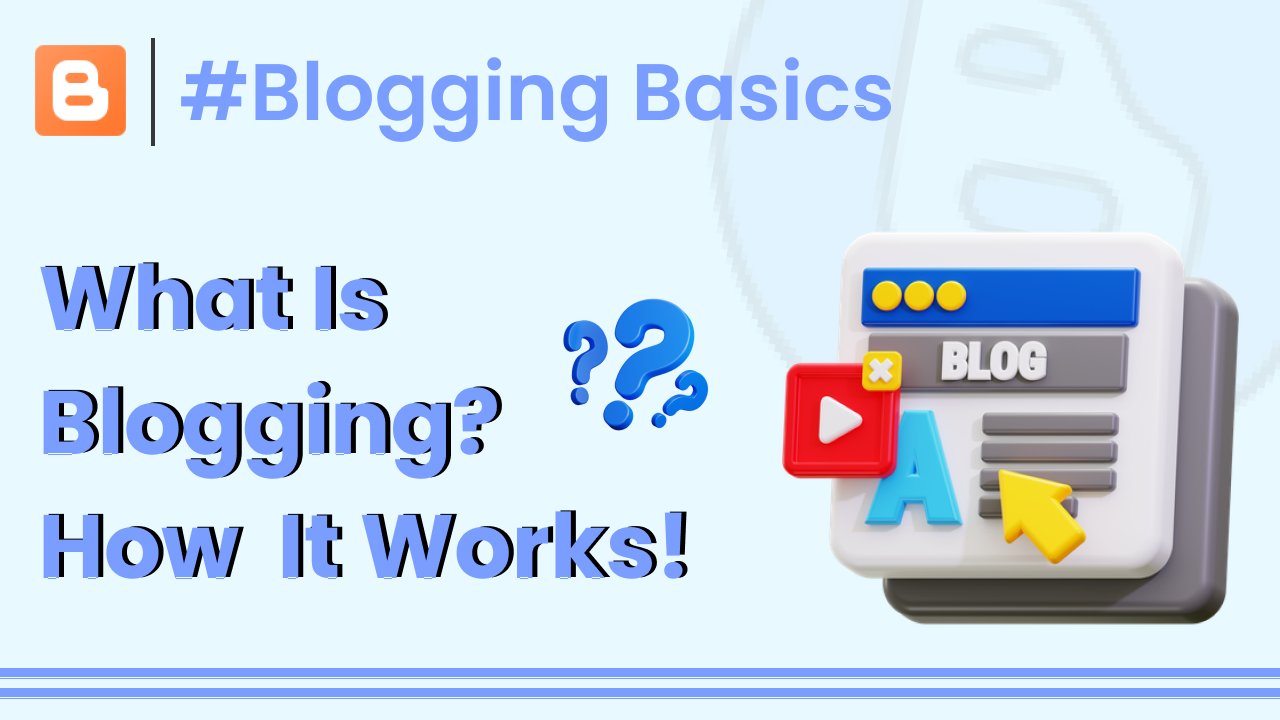
Blogging is often misunderstood. Some people think it is just about writing articles, while others believe it is a quick way to make money online. In reality, blogging is a structured process of publishing content on a website to inform, educate, or share insights with a specific audience.
If you are wondering what blogging is and how it really works, this guide will explain everything step by step in simple language. Whether you are a beginner or just curious about how blogs function behind the scenes, this article will give you a clear understanding.
What Is Blogging?
Blogging is the process of creating and publishing content (called blog posts) on a website. These posts are usually written in an informative, structured format and are displayed in reverse chronological order (newest first).
A blog can focus on:
- Technology
- Education
- Health
- Personal experiences
- Business
- Travel
- Or any specific topic
At its core, blogging is about sharing useful information consistently with an audience.
For a broader definition, you can refer to Wikipedia’s overview of blogging:
https://en.wikipedia.org/wiki/Blog
What Is a Blog?
A blog is a website (or part of a website) where content is regularly updated. Each article is called a “blog post.”
Key elements of a blog:
- A homepage displaying recent posts
- Individual article pages
- Categories and tags
- A navigation menu
- An about and contact page
Blogs are designed to provide value to readers through helpful, organized content.
How Blogging Really Works (Step by Step)
To understand blogging clearly, let’s break it into simple steps.
Step 1: Choosing a Topic or Niche
Before starting a blog, you must choose a niche (a focused topic).
A niche helps you:
- Target a specific audience
- Build authority
- Create consistent content
For example, instead of writing about “technology” broadly, you might focus on:
- Beginner tech guides
- Mobile tips
- Online safety
Clarity in topic improves long-term growth.
Step 2: Creating a Blog Website
To start blogging, you need a website.
A blog requires:
- A domain name (example: yourwebsite.com)
- Web hosting (where your website files are stored)
- A content management system (CMS)
One of the most popular platforms used for blogging is WordPress.
Official site: https://wordpress.org/
WordPress allows users to create and manage blog posts without needing advanced coding skills.
Step 3: Writing and Publishing Blog Posts
Once your website is ready, you begin writing blog posts.
Each blog post usually includes:
- A clear headline
- An introduction
- Structured sections (H2 and H3 headings)
- Useful explanations
- A conclusion
Good blogging focuses on solving problems or answering questions that readers search for.
Step 4: Search Engines Index Your Content
After publishing, search engines like Google scan and index your blog posts.
This process helps your articles appear in search results when users search for related topics.
For example:
If someone searches:
“How to fix slow phone”
And you have written a helpful article on that topic, Google may show your blog in search results.
Step 5: Readers Visit Your Blog
When people click on your article from search results, they become visitors.
If your content:
- Is helpful
- Easy to read
- Well-structured
- Informative
They may:
- Stay longer
- Read more posts
- Share your article
This increases blog credibility over time.
Step 6: Monetization (Optional)
Blogging is not only about money, but it can be monetized.
Common monetization methods:
- Display ads (like Google AdSense)
- Affiliate marketing
- Sponsored posts
- Selling digital products
However, monetization works only after building traffic and trust.
For official AdSense information, visit:
https://support.google.com/adsense/
How Blogging Is Different from Social Media
Many people confuse blogging with social media posting.
Key differences:
| Blogging | Social Media |
|---|---|
| Long-form content | Short updates |
| Owned platform | Third-party platform |
| Long-term visibility | Short lifespan |
| Search engine traffic | Algorithm-based reach |
Blogs provide long-term value, while social media posts fade quickly.
What Makes a Blog Successful?
Blogging works best when:
- Content is consistent
- Information is accurate
- Topics are focused
- User experience is smooth
- Pages load quickly
Search engines prioritize content that:
- Solves real problems
- Is well-structured
- Is written for humans
Common Misconceptions About Blogging
Blogging Is Quick Money
False. Blogging requires time, effort, and consistency.
You Need to Be an Expert
Not necessarily. You need clarity and the ability to explain topics clearly.
More Articles Means Faster Growth
Quality matters more than quantity.
How Long Does It Take for Blogging to Work?
Blogging is a long-term strategy.
Typically:
- First few months: Content building
- 3–6 months: Gradual traffic
- 6–12 months: Stable growth
Success depends on:
- Topic competition
- Content quality
- Consistency
Why Blogging Still Works in 2026
Despite the rise of video platforms and short-form content, blogging remains powerful because:
- People search for answers daily
- Search engines still dominate information discovery
- Written content builds authority
- Blogs are searchable and permanent
As long as people use search engines, blogging will continue to work.
Final Thoughts
Blogging is not magic, and it is not instant success. It is a structured process of creating useful content, publishing it on a website, and allowing search engines to connect it with people who need it.
Understanding what blogging is and how it really works helps you approach it realistically. With patience, consistency, and quality content, blogging can become a valuable platform for sharing knowledge and building an online presence.